

Introduction
I’m often asked how to choose the right physiotherapy course, and in 2025 the best answer blends clinical rigor, accreditation, and reliable student support you can reach when you need it. In this guide, I’ll walk you through what I look for—from entry requirements to clinical placements, from app-enabled learning to post-graduation outcomes—so you can make a confident decision. To set the stage, I recommend starting with one reliable source and working outward; this physiotherapy course overview is designed to help you compare options objectively without getting lost in marketing noise.
Programme Structure
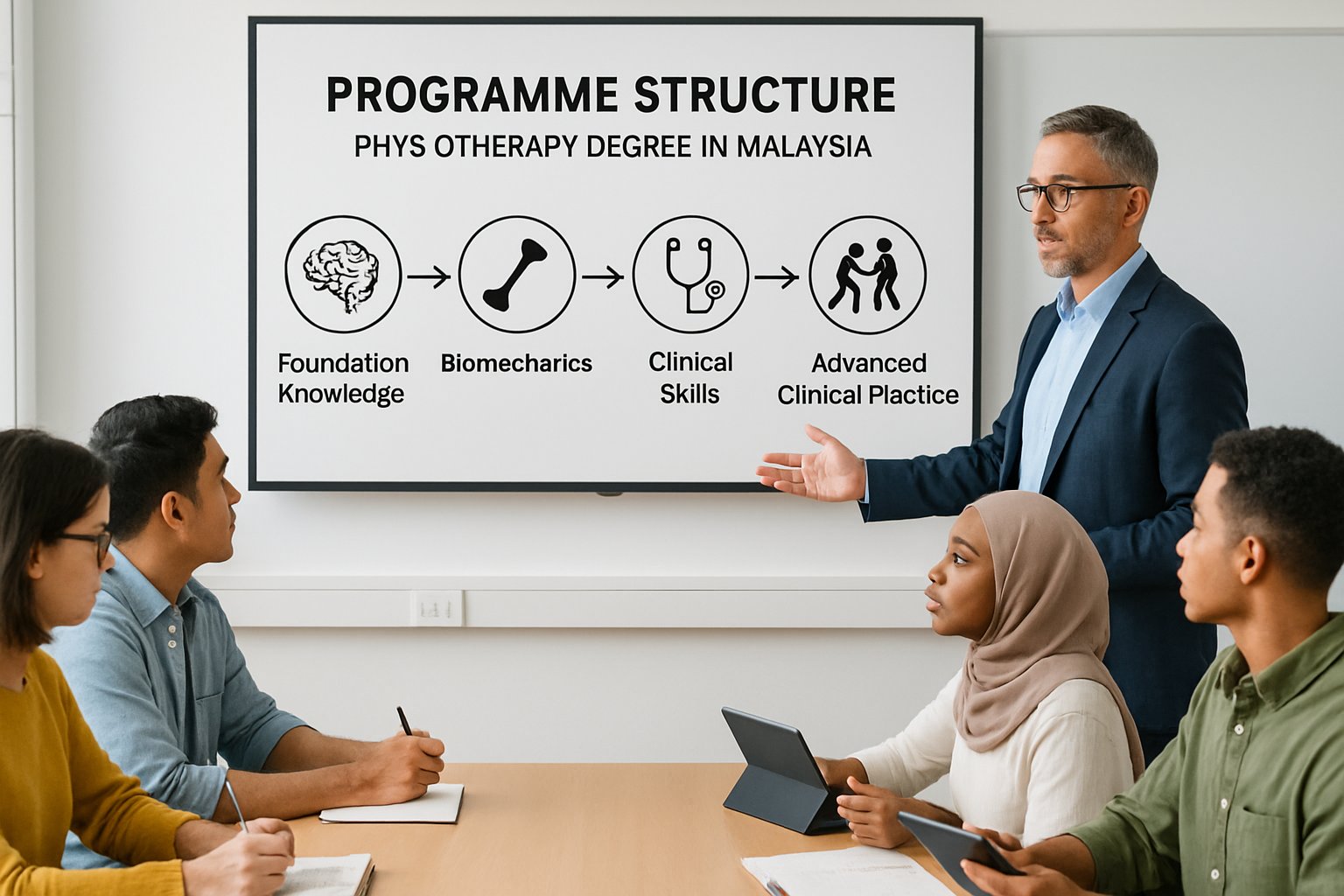
Understanding the programme structure is crucial when selecting a physiotherapy degree in Malaysia, as it outlines the progression from foundational knowledge to advanced clinical practice. A well-designed structure ensures a balanced mix of theory, practical skills, and real-world application, preparing students for the demands of the profession. Before diving into specifics, consider how the structure aligns with your learning style and career goals in physiotherapy.
Physiotherapy programmes typically span four years, starting with basic sciences and building toward integrated clinical experiences. In the first year, the focus is on foundational subjects like anatomy, physiology, biomechanics, and introductory clinical skills, often involving 35–40 credits and minimal observational placements of 0–2 weeks. The second year advances to specialized areas such as musculoskeletal, neurological, and cardiorespiratory practice, with similar credit loads and 6–10 weeks of clinical exposure. By the third year, students tackle complex cases, pediatrics, geriatrics, and research methods, accumulating 35–40 credits and 10–14 clinical weeks. Finally, the fourth year emphasizes integrated placements, leadership, and a research project, with 30–35 credits and 14–20 weeks in clinical settings. This progressive scaffolding helps translate theoretical knowledge into practical expertise.
Course Structure
I look for clear progression from classroom to clinic, with simulation labs bridging that gap. The curriculum should integrate evidence-based practice early, so each practical technique is tied to current guidelines and measurable outcomes. Finally, capstone projects and case conferences should help you synthesize knowledge, build professional judgment, and demonstrate readiness for entry-level practice. Additionally, a strong course structure includes regular assessments that reinforce learning and provide opportunities for feedback, ensuring students are well-prepared for the challenges of physiotherapy in Malaysia.
Entry Requirements
Entry requirements for a physiotherapy course in Malaysia serve as a gateway to ensure students have the necessary foundation for success in this demanding field. They vary by institution but generally emphasize academic preparedness, language skills, and personal attributes suited to patient care. Reviewing these requirements early can help you plan your application and address any gaps in your qualifications.
Minimum Entry Requirements
Generally, you’ll need a science-oriented pre-university qualification (for example STPM, A-Levels, Matriculation, Foundation in Science, or equivalent) with strong performance in Biology—and often Chemistry or Physics. Many providers expect English proficiency at an IELTS 5.5–6.0 equivalent or higher, especially for clinically focused communication and documentation. Programmes also commonly request a pass in Mathematics and relevant secondary-level science subjects to ensure you can handle quantitative and analytical components. Meeting these minima not only secures your spot but also sets a solid base for mastering the physiotherapy degree’s rigorous content.
Entry Requirements for Domestic Students
For Malaysian applicants, institutions typically publish detailed pathways for SPM, STPM, and Diploma holders. You may see expectations like a pass in Bahasa Melayu at SPM, evidence of science readiness, and MUET bands in the 3–4 range depending on the programme’s clinical emphasis. Because clinical placements involve patient contact, you should be prepared for health clearances and a short interview to assess motivation, communication skills, and professional suitability. These tailored requirements help domestic students transition smoothly into the physiotherapy course while aligning with local educational standards.
Alternative Qualifications and Prerequisites
Applicants with a Diploma in Physiotherapy or a closely related allied health field may be considered for credit transfer or advanced standing, subject to curriculum mapping and academic performance. Foundation in Science programmes are often accepted, provided they include core modules in Biology and Chemistry and meet minimum GPA thresholds. If your background lacks a science prerequisite, some institutions offer bridging modules in anatomy, physiology, or research literacy to close gaps before the main course load. Exploring these alternatives can open doors for non-traditional students eager to pursue a physiotherapy degree in Malaysia.
Extra Requirements
Expect a medical check-up, immunization records (for example Hepatitis B), and basic life support certification before clinical placement. Institutions also commonly require personal accident and malpractice insurance for clinical safety. A brief statement of purpose and referee reports can strengthen your application by demonstrating commitment, resilience, and ethical awareness. Fulfilling these extra steps ensures you’re fully prepared for the hands-on aspects of the physiotherapy course and contributes to a safer learning environment.
Career Opportunities
Exploring career opportunities in physiotherapy reveals a dynamic field with diverse paths in Malaysia’s healthcare landscape. Graduates can expect roles that combine clinical expertise with opportunities for growth and specialization. Understanding these prospects early can motivate your choice of physiotherapy degree and guide your studies toward specific interests.
Career Prospects
Typical roles include musculoskeletal therapist in private clinics, neuro-rehabilitation physiotherapist in hospitals, and cardiorespiratory therapist in critical care or step-down units. Graduates also step into sports rehabilitation, pediatric therapy, and community health, with entry-level monthly salaries commonly ranging from RM2,800 to RM4,000 depending on location and setting. With experience, you can move into senior clinical roles, clinic management, research assistance, or education. Building a network during your physiotherapy course can further enhance these prospects and open doors to advanced opportunities.
Prospective Industries
Hospitals, private practices, sports teams, and rehabilitation centers remain the largest employers, but new roles are emerging in wellness technology, digital health, and ergonomic consulting. Community NGOs and home-health providers value therapists who can lead fall-prevention, stroke recovery, and chronic disease programs. Medical devices and rehabilitation tech companies also seek clinicians who can train users, interpret outcomes data, and support product development. As the field evolves, a physiotherapy degree equips you to adapt to these expanding industries in Malaysia.
Advantages
The advantages of pursuing a physiotherapy course extend beyond career stability to personal fulfillment and societal impact. This profession offers a unique blend of science, empathy, and problem-solving that appeals to many aspiring healthcare professionals. Weighing these benefits can help affirm if this path aligns with your passions and long-term goals.
I rate physiotherapy highly for its blend of scientific problem-solving and human connection. You see tangible improvements in function and quality of life, and the skills are portable across settings and countries. Importantly, strong programmes offer 7-day academic advising and 24/7 tech support, plus modern learning apps with offline video, interactive anatomy, and secure case logs so you can study effectively on the go. These features make the physiotherapy degree more accessible and supportive for students in Malaysia.
Testimonials
Testimonials from past students provide valuable insights into the real-world experience of a physiotherapy course. They highlight strengths in teaching, support, and outcomes that might not be evident from brochures alone. Reading these can help you envision your own journey in a physiotherapy degree program.
“The clinical supervisors challenged me to justify every intervention with evidence, which made me confident on day one as a junior therapist,” a recent graduate told me. Another student highlighted the difference support made: “Late-night revision before OSCEs felt manageable because academic chat tutors responded quickly, even on weekends.” These stories underscore how a well-supported physiotherapy course can build both skills and confidence for long-term success.
Study This Programme Online via MAHSA Elevate
Opting to study a physiotherapy course online through platforms like MAHSA Elevate offers flexibility while maintaining essential hands-on components. This blended approach suits modern learners balancing commitments with education. Evaluating such options ensures you choose a format that supports your lifestyle without compromising quality.
When I evaluate blended or online pathways such as MAHSA Elevate, I focus on how digital learning complements mandatory hands-on skills. Look for a platform with structured video labs, step-by-step technique checklists, and secure reflection journals, followed by scheduled on-campus intensives for competencies that must be assessed in person. The best versions provide a mobile app with push reminders, progress dashboards, and easy scheduling for academic or technical support. This integration makes online physiotherapy degrees in Malaysia both practical and effective.
Programme Details
Delving into programme details reveals the nuts and bolts of what makes a physiotherapy course effective and recognized. These elements, from accreditation to assessments, directly influence your learning experience and future employability. Paying close attention here can help you select a programme that meets high standards.
Professional Recognition/Accreditation
Always verify accreditation with the Malaysian Qualifications Agency (MQA) and ensure the programme aligns with professional standards recognized in Malaysia. Accreditation signals that facilities, faculty, and clinical placements meet quality benchmarks, which supports your employability and progression into postgraduate training. If you plan to work internationally, ask admissions about any additional licensing steps required. This recognition is key to a credible physiotherapy degree and opens doors to global opportunities.
Programme Highlights
I prioritize programmes that combine rigorous clinical preparation with real-world readiness. Highlights often include early exposure to patient observation, structured simulation experiences, interprofessional collaboration with nursing and medical students, and a final-year integrative placement. Equally important are robust study supports—academic coaching, exam prep workshops, and 7-day advisory services—plus an app that keeps your timetable, deadlines, and feedback in one place. These features enhance the overall value of a physiotherapy course in Malaysia.
Be a Therapist
Deciding to be a therapist in physiotherapy means embracing a role that combines science with compassionate care. This commitment requires self-reflection on your suitability for the field. Exploring this path can confirm if a physiotherapy degree is the right choice for you.
Explore If a Degree in Physiotherapy Is for You?
Ask yourself whether you enjoy problem-solving at the intersection of biology, movement, and behavior change. Consider how you respond under pressure during practical assessments and whether patient-facing communication energizes you. If you appreciate evidence, teamwork, and incremental progress toward long-term recovery goals, this path is likely a strong fit. Ultimately, a physiotherapy course rewards those who are dedicated to lifelong learning and making a difference in people’s lives.
Career Impact
The career impact of a physiotherapy degree extends far beyond initial job placement, influencing long-term professional growth and contributions to healthcare. Graduates often find themselves in positions to innovate and lead in rehabilitation. Understanding this impact can inspire your pursuit of excellence in the field.
With a solid degree, you can build a career that grows from junior clinician to specialist, clinical educator, or service lead. I’ve seen graduates gain traction by tracking outcomes, presenting at local conferences, and mentoring juniors. Over time, your impact extends beyond individual patients to service design, community health, and policy conversations around rehabilitation access. A physiotherapy course in Malaysia lays the foundation for such meaningful advancements.
The Experience
The experience of studying physiotherapy encompasses daily learning, feedback, and community building that shapes your professional identity. A supportive environment enhances this journey significantly. Reflecting on what to expect can prepare you for success in your physiotherapy degree.
Who Is Teaching?
Faculty should be a blend of seasoned clinicians and researchers with current practice exposure in musculoskeletal, neurological, and cardiorespiratory domains. I look for supervisors who model clinical reasoning out loud, not just technique, and who publish or present on rehabilitation topics. Access to approachable lecturers, drop-in hours, and responsive discussion boards makes a meaningful difference to mastery. Their expertise directly elevates the quality of your physiotherapy course experience.
On Campus Learning
Expect anatomy labs, biomechanics workshops, and skills practice with standardized patients to consolidate knowledge before seeing real cases. High-quality facilities include plinths, gait analysis tools, and simulation spaces that mimic acute care and outpatient settings. Frequent OSCE-style assessments keep you on track, while peer feedback sessions encourage collaborative growth. This hands-on approach is essential for building confidence in a physiotherapy degree program.
Off Campus Learning
Clinical placements rotate through hospitals, private clinics, and community programs so you can compare caseloads and workflows. Supervisors should set clear learning objectives and provide mid-rotation feedback, helping you refine assessment, documentation, and patient education. Some programmes add telehealth practice, preparing you for hybrid care models that are increasingly common. These experiences are vital for applying theoretical knowledge in real-world physiotherapy settings.
How to Apply
Knowing how to apply for a physiotherapy course streamlines the process and increases your chances of acceptance. Preparation and timely submission are key. This step-by-step guidance can make your application journey smoother.
Begin by assembling transcripts, language results, a brief personal statement, and referee contacts. Submit your application early to secure clinical placement slots and allow time for medical checks and immunizations. If shortlisted, prepare for an interview focused on motivation, empathy, and ethical scenarios, and ask about support availability, app features, and supervision ratios so you know exactly how you’ll be supported. Following these steps ensures a strong application for your chosen physiotherapy degree in Malaysia.
Be the Change
Choosing to be the change in physiotherapy means committing to roles that enhance lives through movement and recovery. This profession empowers you to make tangible differences. Embracing this mindset can drive your success in the field.
Physiotherapists restore movement, independence, and dignity. If you’re ready to translate science into compassionate action—with the safety net of responsive academic and technical support—this is your moment to step forward. A physiotherapy course equips you with the tools to effect positive change in Malaysia’s healthcare system.
Academic
Academic details provide transparency about a physiotherapy programme’s credentials and structure. This information helps verify quality and alignment with your goals. Reviewing it carefully is essential for informed decision-making.
Bachelor of Physiotherapy (Hons) (R2/726/6/0022) (03/30) (MQA/FA 1192)
This degree title and code format exemplify transparent accreditation status and renewal cycles that align with national quality standards. When you see clear codes and dates, it’s easier to verify recognition and anticipate any upcoming reviews. Use these references to confirm standing with MQA and to discuss international mobility pathways with admissions. Such details underscore the programme’s commitment to excellence in physiotherapy education.
Contact Us
Reaching out to contact us is a proactive step in your physiotherapy course selection process. It allows for personalized advice and clarification. Don’t hesitate to connect for more insights.
When you’re ready to compare offers or clarify clinical hour structures, reach out to the admissions team and ask for a call with an academic advisor. I recommend confirming support windows—ideally 7-day access to advisors and 24/7 tech chat—plus a hands-on demo of the learning app on your device. If you want to learn more, request sample modules or an OSCE prep overview to gauge teaching quality before you commit. This engagement can solidify your choice of physiotherapy degree.
FAQs
How long does a physiotherapy degree typically take in Malaysia?
Most Bachelor of Physiotherapy programs run four years full-time, including progressive clinical placements. Some offer credit transfers for diploma holders, potentially shortening duration after mapping. Part-time or blended pathways may adjust timelines but must still meet the same clinical competency standards. This structure ensures comprehensive preparation for a physiotherapy career.
What does a typical clinical placement include?
You’ll rotate through hospital and outpatient settings under supervision, with defined learning objectives and assessment checkpoints. Expect to manage patient assessments, documentation, treatment planning, and education with escalating independence. Mid-placement reviews and final evaluations provide structured feedback tied to competency frameworks. These elements build essential skills for physiotherapy practice in Malaysia.
Is MQA accreditation important for employability?
Yes. MQA accreditation confirms program quality and is widely expected by employers in Malaysia. It also supports future study and can facilitate recognition processes if you pursue opportunities abroad. Choosing an accredited physiotherapy course enhances your professional prospects significantly.
Can I study parts of the degree online and still meet clinical requirements?
Blended models deliver theory online and require in-person labs and clinical placements to meet competency standards. Look for clear schedules for on-site intensives, OSCEs, and supervised hours. Ensure the learning app and support team help you track requirements and prepare for each in-person block. This approach makes physiotherapy degrees accessible while maintaining rigor.